



What causes the tacky film, how to remove it without damaging the finish, and what keeps it from coming back.
Kitchen cabinets get sticky because cooking sends a fine mist of oil and steam into the air, and that mist lands on nearby surfaces and slowly turns into a tacky film. Dust sticks to the film, and the layer thickens a little more every week. Wiping cabinets regularly, using the vent hood, and cleaning without leaving soap behind stops most of it. Adding recurring house cleaning to the routine keeps the film from hardening in the first place.
Cabinet grease is easy to miss until a handle feels gummy or a wipe comes back yellow. This guide explains where the stickiness comes from, how to remove it safely, and how to keep it from returning.
Why Do Kitchen Cabinets Get Sticky?
Every time something sears, fries, or simmers, a fine mist of oil becomes airborne. Tasting Table explains that this vapor rises on hot air, settles on cabinets, and dries into a thin, tacky layer that dust then clings to. Over time, that layer gets thick enough that a quick swipe with a sponge no longer moves it.
Steam makes the problem worse. Steam from boiling food blends with airborne oil, and the mix forms a sticky, yellowish film. Humidity has a similar effect, since cleaning professionals note that grease mixed with moisture in the air turns tacky and attracts dust.
Cleaning habits can add to the stickiness too. Some cleaners leave oil or wax residue behind, and leftover soap attracts dust and oil, so cabinets can feel tacky even right after a wipe-down.
Which Spots Get the Greasiest?
Cabinets above and beside the stove take the heaviest load because rising vapor reaches them first. Cabinet tops collect grease and dust out of sight, handles and pulls pick up oil from hands during cooking, and the backsplash and range hood edges build film as well. Grease and dust also gather behind and around the stove, one of the spots covered in this guide to the hidden areas of your home that need regular cleaning.
How Do You Clean Sticky Cabinets Safely?
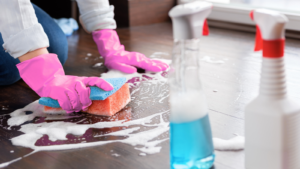
Start dry. A microfiber cloth removes loose dust and cobwebs first, which keeps dust from turning into mud once liquid is added. Next, wipe with a soft cloth dampened in warm water and a few drops of dish soap, working in small sections and following the grain on wood.
Rinse by wiping again with a clean cloth dampened with plain water, because leftover soap brings the stickiness right back. Then dry each section immediately. Moisture left sitting can cause streaks and, on wood, warping.
Stubborn film may need more. A kitchen degreaser made for the cabinet finish works well when tested first on a hidden spot, and a paste of baking soda and water handles sticky patches without hard scrubbing. Abrasive pads should stay out of the picture, since heavy scrubbing can damage the finish.
How Can You Prevent Grease Buildup in the Kitchen?
Prevention starts at the stove. Running the vent hood during cooking pulls grease out of the air before it settles, and the filters work best when they are clean, so washing them regularly matters. Professional cleaners also recommend cooking at lower heat, covering pans, and using an air fryer in place of heavy frying, since all three keep less oil in the air.
Small habits fill in the rest. Wipe splatters the same day, before they dry. Give handles and pulls a quick pass each week. Open a window or run a fan when boiling or frying, and wipe down the fronts near the stove often enough that no layer gets a chance to build.
What About the Tops of Cabinets?
Cabinet tops collect grease and dust that nobody sees, and the buildup is harder to remove once it settles. Because the job means working at height, a stable step stool and a second person nearby make it safer. Many professional crews do not climb beyond a standard step stool, so tall cabinet tops may fall outside a regular visit and are best handled by the homeowner with a degreaser and a microfiber cloth. About once a month is a sensible rhythm for most kitchens.
Can Recurring House Cleaning Keep Cabinets From Getting Sticky?
Mostly, yes, because frequency matters more than effort. Grease wiped off every week or two never gets the chance to dry into a hard film, while grease left for months needs soaking and scrubbing. A standard kitchen clean from a house cleaning service usually includes wiping cabinet exteriors, and the cleaning services page outlines what a regular visit covers. Between visits, a light wipe near the stove and handles keeps buildup low. Homes that fry often or have weak ventilation benefit most from a tighter schedule.
Frequently Asked Questions
Why are my cabinets still sticky after cleaning?
Residue is the usual cause. Leftover soap or cleaner leaves a film that attracts dust and oil. Rinsing with a clean damp cloth and drying fully usually fixes it. If the stickiness returns within days, grease from the stove is likely still landing on the cabinets.
How often should kitchen cabinets be cleaned?
A quick wipe of the sections near the stove every week, plus a full wipe of fronts, handles, and tops about once a month, works for most kitchens. Homes that cook with a lot of oil need it more often. A house cleaning service on a regular schedule can cover the fronts at every visit.
Do sticky cabinets need harsh chemicals?
Usually not. Warm water and dish soap handle light buildup, and a baking soda paste covers tougher spots. A kitchen degreaser is the next step, tested on a hidden area first.
The Takeaway
Greasy, tacky cabinets build up gradually, but the cure is easy: wipe away the film while it’s still thin, rinse and dry the surfaces thoroughly, and keep cooking oil from drifting onto them to begin with. Spend a few minutes on it each week, and you’ll skip the long, miserable scrub sessions down the road.
Rather Not Do It Yourself?
Pink Shoe Cleaning Crew can keep your kitchen buildup in check with recurring house cleaning across the Omaha area. Reach us at 402-330-0930 or customerservice@pinkshoecleaningcrew.com.